Understanding Risk Tolerance in Investing
Learn how to assess your personal risk tolerance to make informed investment decisions that align with your comfort level.
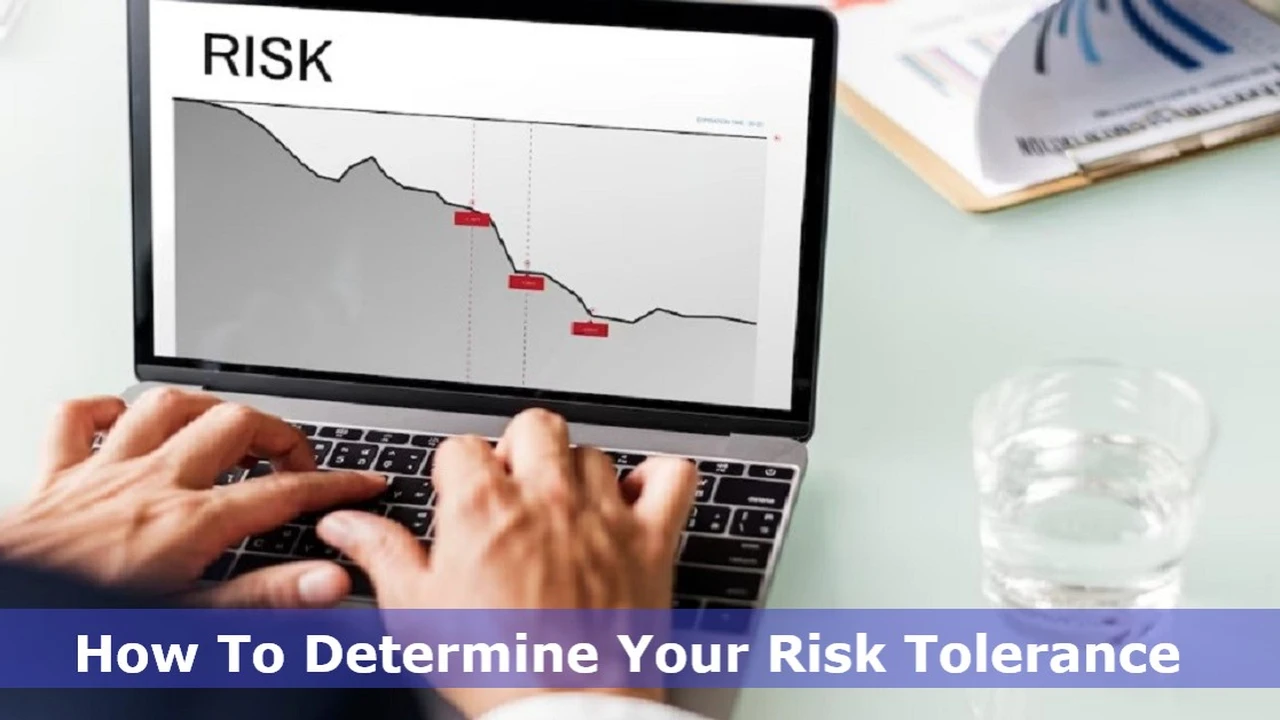
Learn how to assess your personal risk tolerance to make informed investment decisions that align with your comfort level.
Understanding Risk Tolerance in Investing
What is Investment Risk Tolerance? Defining Your Comfort Zone
When you put your money into investments, there's always a chance you could lose some of it. That's what we call investment risk. But how much risk are you personally comfortable with? That's your risk tolerance. It's not just about how much money you can afford to lose, but also how you feel emotionally about potential losses. Some people can sleep soundly even when their portfolio is down 20%, while others might panic at a 5% dip. Understanding your risk tolerance is absolutely crucial because it helps you choose investments that align with your personality and financial goals. If you invest too aggressively for your comfort level, you might make rash decisions during market downturns, like selling everything at a loss. If you invest too conservatively, you might miss out on significant growth opportunities. It's about finding that sweet spot where you're challenged but not stressed.
Why is Knowing Your Risk Tolerance Important? Aligning Investments with Your Life
Think of your investment journey like a road trip. Your risk tolerance is like your preferred cruising speed. Some people love to drive fast and take winding roads, while others prefer a steady, predictable highway. Knowing your risk tolerance helps you avoid common pitfalls. For instance, if you're naturally risk-averse but invest heavily in volatile tech stocks, you're setting yourself up for anxiety and potential regret. Conversely, if you're comfortable with higher risk but stick to low-yield savings accounts, you're leaving potential returns on the table. Your risk tolerance also changes over time. A young person with decades until retirement might have a higher tolerance for risk than someone nearing retirement who needs to preserve capital. Life events like getting married, having children, or buying a house can also shift your perspective on risk. It's not a static number; it's a dynamic part of your financial identity.
Factors Influencing Your Risk Tolerance: Beyond Just Money
Several elements play a role in shaping your risk tolerance. It's not just about your current financial situation. Let's break down some key factors:
Time Horizon: How Long Until You Need the Money?
This is perhaps the most significant factor. If you're investing for retirement 30 years away, you have a long time to recover from market downturns. This longer time horizon generally allows for a higher risk tolerance. You can afford to ride out the ups and downs. However, if you need the money in five years for a down payment on a house, your time horizon is much shorter, and you'll likely have a lower risk tolerance. You can't afford significant losses right before you need the funds.
Financial Goals: What Are You Saving For?
Are you saving for a child's education, a new car, or early retirement? Different goals have different urgency and financial requirements. A goal with a fixed deadline and a specific amount needed might necessitate a more conservative approach, while a more flexible goal might allow for more aggressive investing.
Income Stability and Job Security: Your Financial Safety Net
If you have a stable job with a consistent income and good job security, you might feel more comfortable taking on higher investment risks. You have a reliable income stream to fall back on. Conversely, if your income is irregular or your job is less secure, you might prefer a more conservative investment strategy to protect your capital.
Existing Savings and Emergency Fund: Your Financial Cushion
Having a robust emergency fund (typically 3-6 months of living expenses) provides a crucial safety net. If you have this cushion, you're less likely to need to tap into your investments during a market downturn, which can prevent forced selling at a loss. The more secure your existing savings, the more comfortable you might be with higher-risk investments.
Investment Knowledge and Experience: Confidence Through Understanding
The more you understand about investing, different asset classes, and market cycles, the more confident you might feel taking on certain risks. Beginners often have lower risk tolerance simply because they're unfamiliar with the terrain. As you gain experience and knowledge, your comfort level might increase.
Personality and Emotional Makeup: Your Gut Feeling
This is the subjective part. Are you generally a cautious person or a risk-taker in other areas of your life? Do you tend to panic under pressure, or can you remain calm? Your inherent personality traits play a significant role in how you react to market volatility. Some people are simply more comfortable with uncertainty than others.
Assessing Your Risk Tolerance: Tools and Questionnaires
While your gut feeling is a start, there are more structured ways to assess your risk tolerance. Many financial institutions and online platforms offer questionnaires designed to help you understand your comfort level with risk. These questionnaires typically ask about your financial situation, investment goals, and how you would react to various market scenarios. Here are some popular tools and platforms:
Fidelity's Risk Tolerance Questionnaire: A Comprehensive Approach
Fidelity offers a detailed risk tolerance questionnaire that delves into various aspects of your financial life and emotional responses to market fluctuations. It asks questions like: 'If your investment portfolio lost 20% of its value in a short period, what would you do?' or 'How important is it for you to avoid any loss of principal?' Based on your answers, it categorizes you into risk profiles like 'Conservative,' 'Moderate,' 'Growth,' or 'Aggressive.' This helps you understand their recommended asset allocations. While they don't provide a specific 'price,' the questionnaire is free to use for anyone considering investing with Fidelity or just seeking self-assessment.
Vanguard's Investor Questionnaire: Focus on Long-Term Goals
Vanguard, known for its low-cost index funds, also provides an investor questionnaire that helps you determine your risk profile. Their questions often focus on your long-term financial goals and your willingness to accept short-term volatility for long-term gains. They might ask about your reaction to market downturns and your investment time horizon. Similar to Fidelity, this tool is free and helps guide you towards their recommended portfolio allocations, often emphasizing diversified, low-cost ETFs and mutual funds.
Schwab's Risk Profile Tool: Interactive and Educational
Charles Schwab offers an interactive risk profile tool that not only assesses your tolerance but also provides educational insights into different risk levels. It might present hypothetical scenarios and ask you to choose your preferred outcome. This tool is also free and helps you understand how different investment choices align with your comfort level. They often link this to their various investment products, from managed portfolios to self-directed trading.
Personal Capital's Risk Assessment: Integrated with Financial Planning
Personal Capital, a popular financial planning and wealth management platform, includes a risk assessment tool as part of its broader suite of services. While the basic financial tracking is free, their wealth management services (which include more in-depth risk analysis and personalized advice) come with a fee, typically a percentage of assets under management (e.g., 0.89% for accounts up to $1 million). Their tool integrates your current portfolio and financial goals to give you a more holistic view of your risk exposure.
Independent Online Quizzes: Quick and Informative
Many financial education websites and blogs offer free, quick risk tolerance quizzes. While these might not be as comprehensive as those from major financial institutions, they can provide a good starting point for self-reflection. Just search for 'investment risk tolerance quiz' online. Be aware that these are general guides and should not replace professional financial advice.
Understanding Risk Profiles: Conservative, Moderate, Aggressive
Once you've assessed your risk tolerance, you'll typically fall into one of several broad categories. These categories help financial advisors and platforms recommend suitable investment strategies:
Conservative Investor: Prioritizing Capital Preservation
A conservative investor prioritizes the safety of their principal over high returns. They are highly risk-averse and prefer investments with low volatility. They are willing to accept lower returns in exchange for greater stability. Their portfolios typically consist of a high percentage of cash, money market accounts, certificates of deposit (CDs), and high-quality bonds. They might have a small allocation to very stable, dividend-paying stocks. This profile is often suitable for those with a short time horizon or those who cannot afford any significant loss of capital.
Moderate Investor: Balancing Risk and Return
A moderate investor seeks a balance between capital preservation and growth. They are willing to accept some level of risk for potentially higher returns, but they are not comfortable with significant market fluctuations. Their portfolios often include a mix of bonds and stocks, with a balanced allocation (e.g., 50% stocks, 50% bonds, or 60% stocks, 40% bonds). They might invest in diversified mutual funds or ETFs that cover various sectors and geographies. This profile is common for individuals with a medium-term time horizon or those who want growth without excessive volatility.
Growth Investor: Seeking Capital Appreciation
A growth investor is primarily focused on capital appreciation and is willing to accept higher levels of risk and volatility to achieve substantial returns. They are comfortable with market fluctuations and have a longer time horizon to recover from potential downturns. Their portfolios are heavily weighted towards stocks, often including growth stocks, emerging market equities, and potentially some alternative investments. They might have a smaller allocation to bonds for diversification. This profile is often suitable for younger investors with a long time horizon and a strong understanding of market dynamics.
Aggressive Investor: Maximizing Returns with Higher Risk
An aggressive investor is highly comfortable with risk and seeks to maximize returns, even if it means significant short-term volatility and potential losses. They have a very long time horizon and a strong belief in the long-term growth of the market. Their portfolios are almost entirely composed of stocks, including individual stocks, sector-specific ETFs, and potentially more speculative investments. They might also explore options, futures, or other complex financial instruments. This profile is for those with a very high risk tolerance, extensive investment knowledge, and a robust financial safety net.
Matching Your Risk Tolerance to Investment Products: Practical Examples
Once you understand your risk profile, you can start matching it to specific investment products. Here are some examples:
For Conservative Investors: Safety First
- High-Yield Savings Accounts (HYSA): These offer better interest rates than traditional savings accounts while keeping your money liquid and FDIC-insured.
- Certificates of Deposit (CDs): You lock in your money for a set period (e.g., 6 months to 5 years) for a fixed interest rate. They are FDIC-insured.
- Government Bonds (e.g., US Treasury Bonds): Considered very safe, these are debt instruments issued by governments. They offer fixed interest payments.
- Money Market Funds: These invest in highly liquid, short-term debt instruments. While not FDIC-insured, they are generally very low risk.
- Example Product: Ally Bank Online Savings Account. Offers competitive HYSA rates, no monthly fees. Price: Free to open and maintain. Use Case: Emergency fund, short-term savings goals.
- Example Product: Fidelity Government Money Market Fund (SPAXX). Invests in short-term government securities. Price: No transaction fees for Fidelity customers. Use Case: Parking cash for short periods, very low risk.
For Moderate Investors: Balanced Growth
- Balanced Mutual Funds/ETFs: These funds automatically diversify across stocks and bonds, maintaining a relatively stable allocation.
- Dividend Stocks: Shares of established companies that regularly pay out a portion of their earnings to shareholders. They tend to be less volatile than growth stocks.
- Corporate Bonds: Debt instruments issued by companies. They offer higher yields than government bonds but carry more risk.
- Real Estate Investment Trusts (REITs): Companies that own, operate, or finance income-producing real estate. They offer diversification and often pay dividends.
- Example Product: Vanguard Balanced Index Fund (VBIAX). A mutual fund that invests approximately 60% in stocks and 40% in bonds. Price: Expense ratio of 0.07%. Use Case: Long-term growth with moderate risk, suitable for retirement savings.
- Example Product: iShares Core S&P 500 ETF (IVV). Tracks the S&P 500 index, offering broad exposure to large US companies. Price: Expense ratio of 0.03%. Use Case: Core equity holding for diversified growth.
For Growth Investors: Aggressive Pursuit of Returns
- Growth Stocks: Shares of companies expected to grow earnings and revenue at a faster rate than the overall market. They can be volatile.
- Technology Sector ETFs: Funds that focus specifically on the technology industry, which often has high growth potential but also higher risk.
- Emerging Market Funds: Invest in companies in developing economies, offering high growth potential but also significant political and economic risks.
- Small-Cap Stocks: Shares of smaller companies that have high growth potential but are also more volatile than large-cap stocks.
- Example Product: ARK Innovation ETF (ARKK). Actively managed ETF investing in disruptive innovation companies. Price: Expense ratio of 0.75%. Use Case: High-growth potential, high risk, for investors comfortable with volatility.
- Example Product: Vanguard Total Stock Market Index Fund (VTSAX). Invests in the entire US stock market, including large, mid, and small-cap companies. Price: Expense ratio of 0.04%. Use Case: Broad market exposure for long-term growth.
For Aggressive Investors: Maximum Risk, Maximum Potential Reward
- Individual Stock Picking: Directly investing in individual company stocks based on in-depth research and conviction. Requires significant knowledge and time.
- Options and Futures: Complex financial derivatives that offer leverage but also carry very high risk of significant losses.
- Cryptocurrencies (e.g., Bitcoin, Ethereum): Highly volatile digital assets with significant price swings.
- Venture Capital/Angel Investing: Investing in early-stage private companies. Extremely high risk, but also potential for exponential returns.
- Example Product: Coinbase (Cryptocurrency Exchange). Platform for buying, selling, and storing various cryptocurrencies. Price: Trading fees vary by transaction size and type (e.g., 0.50% spread fee, plus transaction fees). Use Case: Speculative investment in digital assets.
- Example Product: Interactive Brokers (Brokerage Platform). Offers access to a wide range of complex financial instruments including options, futures, and forex. Price: Commission fees vary by asset class (e.g., $0.65 per options contract). Use Case: Advanced trading strategies, high risk.
Revisiting Your Risk Tolerance: It's Not Set in Stone
Your risk tolerance isn't a one-time assessment. It's a dynamic concept that can and should be revisited periodically. Major life events, changes in your financial situation, or even significant market shifts can influence your comfort level with risk. It's a good idea to reassess your risk tolerance at least once a year, or whenever a major life change occurs. This ensures that your investment strategy remains aligned with your current circumstances and emotional comfort. Remember, the goal is to build a portfolio that helps you achieve your financial goals without causing undue stress or leading to impulsive decisions during market volatility. Stay informed, stay calm, and invest wisely!
:max_bytes(150000):strip_icc()/277019-baked-pork-chops-with-cream-of-mushroom-soup-DDMFS-beauty-4x3-BG-7505-5762b731cf30447d9cbbbbbf387beafa.jpg)