The Ultimate Guide to Social Security Benefits
A comprehensive guide to understanding and maximizing your Social Security benefits for retirement.

A comprehensive guide to understanding and maximizing your Social Security benefits for retirement.
The Ultimate Guide to Social Security Benefits
Hey there, future retiree! Ever wondered how Social Security really works? It's a big topic, and let's be honest, it can feel a bit like navigating a maze. But don't sweat it! This guide is designed to cut through the jargon and give you a clear, actionable understanding of your Social Security benefits. We're going to cover everything from how your benefits are calculated to when you should claim them, and even some smart strategies to maximize what you get. Whether you're years away from retirement or just around the corner, understanding Social Security is crucial for a secure financial future. So, let's dive in and demystify this essential part of your retirement plan.
Understanding Social Security Basics Your Foundation for Retirement
First things first, what exactly is Social Security? It's a federal program in the United States that provides benefits to retirees, the disabled, and survivors of deceased workers. It's funded primarily through payroll taxes, meaning a portion of your earnings (and your employer's) goes into the system. Think of it as a collective insurance policy that you've been paying into throughout your working life. When you retire, become disabled, or pass away, you or your eligible family members can receive benefits based on your earnings record.
The Social Security Administration (SSA) tracks your earnings throughout your career. These earnings are then used to calculate your Average Indexed Monthly Earnings (AIME), which is the basis for your Primary Insurance Amount (PIA). Your PIA is the amount you're entitled to receive at your Full Retirement Age (FRA). We'll talk more about FRA in a bit, but it's a key concept to grasp.
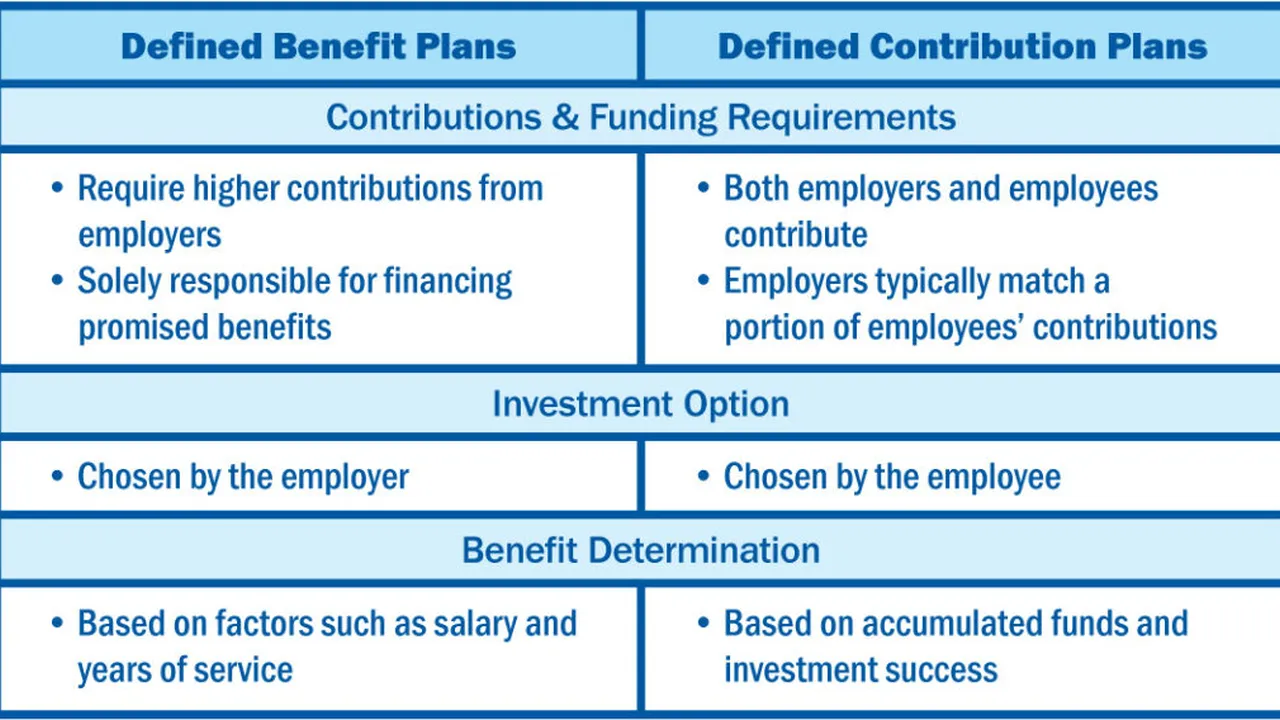
It's important to remember that Social Security isn't designed to be your sole source of retirement income. Most financial experts recommend it as one leg of a three-legged stool, with personal savings (like 401(k)s and IRAs) and pensions (if you have one) making up the other two. However, for many, it forms a significant and reliable portion of their retirement income, making it vital to understand how to get the most out of it.
Calculating Your Social Security Benefits How Your Earnings Translate to Income
So, how does the SSA figure out how much you'll get? It's a bit more complex than just adding up your contributions. The calculation involves your highest 35 years of earnings. If you have fewer than 35 years of earnings, some years will be counted as zero, which can lower your benefit. This is why working for at least 35 years is often recommended if you want to maximize your Social Security.
The earnings are 'indexed' to account for changes in average wages over time. This means your past earnings are adjusted to reflect current wage levels, ensuring that your benefits reflect the general increase in living standards. After indexing, your highest 35 years of earnings are averaged to get your AIME. This AIME is then run through a formula with 'bend points' to determine your PIA. These bend points are specific dollar amounts that change each year and are designed to make the benefit formula progressive, meaning lower earners receive a higher percentage of their pre-retirement earnings back in benefits compared to higher earners.
For example, for someone turning 62 in 2024, the bend points are $1,174 and $7,078. This means you get 90% of the first $1,174 of your AIME, 32% of the amount between $1,174 and $7,078, and 15% of the amount above $7,078. These percentages and bend points are subject to change annually, so it's always a good idea to check the latest figures on the SSA website.
The best way to get an estimate of your own benefits is to create a 'my Social Security' account online. This account allows you to view your earnings record, get personalized benefit estimates, and even apply for benefits. It's a fantastic tool and highly recommended for anyone planning their retirement.
Full Retirement Age and Claiming Strategies When to Take Your Benefits
This is where things get really interesting and where your decisions can significantly impact your total lifetime benefits. Your Full Retirement Age (FRA) is the age at which you're entitled to receive 100% of your PIA. Your FRA depends on your birth year:
- Born 1943-1954: FRA is 66
- Born 1955: FRA is 66 and 2 months
- Born 1956: FRA is 66 and 4 months
- Born 1957: FRA is 66 and 6 months
- Born 1958: FRA is 66 and 8 months
- Born 1959: FRA is 66 and 10 months
- Born 1960 or later: FRA is 67
You can claim Social Security benefits as early as age 62, but doing so will result in a permanent reduction of your monthly benefit. The reduction can be as much as 30% if you claim at 62 and your FRA is 67. Conversely, if you delay claiming past your FRA, your monthly benefit will increase by a certain percentage for each year you delay, up to age 70. These are called Delayed Retirement Credits (DRCs).
For those born in 1943 or later, DRCs add 8% per year to your benefit for each year you delay past your FRA, up to age 70. That's a pretty significant boost! For example, if your FRA is 67 and you delay until 70, you'll get an extra 24% on top of your PIA. This is guaranteed, inflation-adjusted growth, which is hard to beat in any investment.
So, when should you claim? There's no one-size-fits-all answer, as it depends on several factors:
- Your Health and Life Expectancy: If you have a family history of longevity or are in excellent health, delaying might make sense. If your health is poor, claiming earlier might be the better option.
- Your Financial Needs: Do you need the income to cover living expenses? If so, claiming earlier might be necessary. If you have other income sources, you might be able to delay.
- Spousal Benefits: If you're married, coordinating claiming strategies with your spouse can significantly increase your combined lifetime benefits.
- Work Plans: If you plan to continue working, claiming early might lead to your benefits being reduced due to the earnings test.
Many financial advisors use specialized software to help clients determine their optimal claiming strategy. These tools can model different scenarios and show you the projected lifetime benefits for various claiming ages. While I can't recommend specific financial advisors, seeking professional guidance on this particular decision is often a very wise move.
Maximizing Your Social Security Benefits Smart Strategies for More Income
Beyond just choosing your claiming age, there are several strategies you can employ to maximize your Social Security benefits:
Work at Least 35 Years Boosting Your Earnings Record
As mentioned, your benefit calculation uses your highest 35 years of earnings. If you work fewer than 35 years, those 'missing' years will be counted as zero, which will lower your AIME and, consequently, your PIA. If you're nearing retirement and have fewer than 35 years of substantial earnings, consider working a few extra years to replace some of those zero-earning years with higher-earning ones. Even a few years can make a noticeable difference.
Increase Your Earnings Now Higher Income, Higher Benefits
Since your benefits are based on your earnings, increasing your income during your working years will directly lead to higher Social Security benefits. This could mean negotiating for raises, taking on side gigs, or investing in skills that lead to higher-paying jobs. Every dollar you earn (up to the annual Social Security earnings limit) contributes to your future benefits.
Coordinate Spousal Benefits Maximizing for Couples
This is a huge one for married couples. A spouse can claim either their own Social Security benefit or a spousal benefit, which is up to 50% of their spouse's PIA, whichever is higher. This can be particularly beneficial if one spouse has significantly higher earnings than the other. The higher-earning spouse should generally delay claiming their benefits as long as possible (up to age 70) to maximize their own benefit, which in turn maximizes the potential spousal benefit for their partner. The lower-earning spouse might claim their own benefit earlier, or claim a spousal benefit once the higher earner files. There are complex rules around this, so it's worth exploring with the SSA or a financial advisor.
Consider Survivor Benefits Protecting Your Loved Ones
If you pass away, your surviving spouse, children, or even dependent parents may be eligible for survivor benefits based on your earnings record. The amount of the survivor benefit depends on the deceased worker's PIA and the survivor's relationship to the worker. For example, a surviving spouse can receive up to 100% of the deceased worker's benefit if they claim at their own FRA. Understanding these benefits is crucial for estate planning and ensuring your loved ones are financially secure.
Understand the Earnings Test Working While Claiming
If you claim Social Security benefits before your FRA and continue to work, your benefits might be reduced if your earnings exceed certain limits. This is known as the earnings test. For 2024, if you are under FRA, the SSA deducts $1 from your benefits for every $2 you earn above $22,320. In the year you reach FRA, the deduction is $1 for every $3 you earn above a higher limit ($59,520 in 2024) until the month you reach FRA. Once you reach your FRA, the earnings test no longer applies, and you can earn as much as you want without your benefits being reduced. Any benefits withheld due to the earnings test are not lost; your PIA is recalculated at your FRA to account for the withheld benefits, potentially increasing your future monthly payments.
Tools and Resources for Social Security Planning Your Digital Toolkit
Navigating Social Security can be made much easier with the right tools and resources. Here are some of the best ones available:
My Social Security Account Your Personal Portal
This is hands down the most important tool. Creating a free 'my Social Security' account on the SSA website (www.ssa.gov) allows you to:
- View your complete earnings record and verify its accuracy.
- Get personalized estimates of your future retirement, disability, and survivor benefits.
- Review your Social Security Statement.
- Apply for benefits online.
- Manage your benefits once you start receiving them.
It's secure, easy to use, and provides the most accurate information tailored to your specific situation. Make sure to set one up if you haven't already!
Social Security Administration Website The Official Source
The official SSA website (www.ssa.gov) is a treasure trove of information. You can find detailed publications on every aspect of Social Security, including specific rules for different types of benefits, eligibility requirements, and the latest updates on benefit amounts and earnings limits. It's well-organized and provides authoritative answers to most of your questions.
Social Security Calculators Online Estimators
While your 'my Social Security' account provides personalized estimates, there are also various online calculators that can help you model different claiming scenarios. These can be useful for comparing the impact of claiming at different ages or understanding how various factors might affect your benefits. Some popular ones include:
- Open Social Security (www.opensocialsecurity.com): This is a free, open-source calculator that allows for detailed modeling of claiming strategies, especially for couples. It's highly regarded for its accuracy and comprehensive features.
- AARP Social Security Calculator (www.aarp.org/retirement/social-security/benefits-calculator/): AARP offers a user-friendly calculator that provides quick estimates and helps visualize the impact of different claiming ages.
- Financial Engines (now Edelman Financial Engines) Social Security Planner: Many financial planning firms offer their own proprietary calculators. While you might need to be a client to access some of these, they often provide very sophisticated analysis.
When using third-party calculators, always cross-reference with information from the official SSA website or your 'my Social Security' account to ensure accuracy.
Financial Planning Software Integrating Social Security into Your Plan
Many comprehensive financial planning software tools integrate Social Security benefit projections into your overall retirement plan. These tools can help you see how your Social Security income fits with your other savings and investments. While these are typically used by financial advisors, some personal finance software options also offer this capability. Examples include:
- Quicken (www.quicken.com): A long-standing personal finance software that allows you to track investments, budget, and plan for retirement, often including Social Security projections. It's a paid software, but offers robust features for comprehensive financial management.
- Personal Capital (now Empower Personal Wealth) (www.personalcapital.com): Offers free tools for tracking your net worth, investments, and cash flow, along with a retirement planner that can incorporate Social Security. They also offer paid advisory services.
- Fidelity, Vanguard, Charles Schwab (and other major brokerage firms): These firms often provide free retirement planning tools and calculators to their clients, which can help integrate Social Security into your broader investment strategy.
These tools are great for seeing the bigger picture and understanding how Social Security interacts with your other financial assets. They can help you make informed decisions about your overall retirement strategy, not just your Social Security claiming age.
Common Social Security Questions and Misconceptions Clearing the Air
There are a lot of myths and misunderstandings surrounding Social Security. Let's clear up some of the most common ones:
Will Social Security Run Out Addressing Solvency Concerns
This is perhaps the most common concern. While Social Security faces long-term financial challenges, it is highly unlikely to 'run out.' The program is funded by ongoing payroll taxes, so as long as people are working and paying taxes, there will be money flowing into the system. The concern is that without changes, the program may only be able to pay a reduced percentage of promised benefits in the future (e.g., 80% of benefits). Congress has made changes in the past to ensure its solvency, and it's expected they will do so again. So, while adjustments may be needed, the program is not going to disappear entirely.
Is Social Security Taxable Understanding the Tax Implications
For many people, a portion of their Social Security benefits is indeed taxable. If your 'provisional income' (which includes your adjusted gross income, tax-exempt interest, and half of your Social Security benefits) exceeds certain thresholds, up to 85% of your Social Security benefits may be subject to federal income tax. These thresholds are:
- Single filers: $25,000 to $34,000 (up to 50% taxable), over $34,000 (up to 85% taxable)
- Married filing jointly: $32,000 to $44,000 (up to 50% taxable), over $44,000 (up to 85% taxable)
Some states also tax Social Security benefits, so check your state's tax laws. This is an important consideration for your overall retirement income planning.
Can I Work While Receiving Benefits Navigating the Earnings Test
Yes, you can work while receiving Social Security benefits. However, as discussed earlier, if you are under your Full Retirement Age (FRA), your benefits may be reduced if your earnings exceed certain limits. Once you reach your FRA, there are no limits on how much you can earn, and your benefits will not be reduced. The earnings test only applies to those claiming benefits before their FRA.
What if I Never Worked Enough Credits for Eligibility
To be eligible for Social Security retirement benefits, you generally need to have accumulated 40 'credits' of work. You can earn up to 4 credits per year, so this typically means working for at least 10 years. If you haven't accumulated enough credits, you won't be eligible for your own retirement benefits. However, you might still be eligible for spousal or survivor benefits based on a spouse's or former spouse's earnings record, provided you meet certain criteria.
Social Security and Inflation Cost of Living Adjustments (COLAs)
Social Security benefits are adjusted annually for inflation through a Cost-of-Living Adjustment (COLA). This means your benefits will generally increase each year to keep pace with rising prices, helping to maintain your purchasing power in retirement. The COLA is based on the Consumer Price Index for Urban Wage Earners and Clerical Workers (CPI-W). This is a significant advantage of Social Security compared to some other retirement income sources that may not offer inflation protection.
Understanding Social Security is a cornerstone of effective retirement planning. By taking the time to learn how it works, exploring your options, and utilizing the available tools, you can make informed decisions that will significantly impact your financial well-being in your golden years. Don't leave this crucial piece of your retirement puzzle to chance!
:max_bytes(150000):strip_icc()/277019-baked-pork-chops-with-cream-of-mushroom-soup-DDMFS-beauty-4x3-BG-7505-5762b731cf30447d9cbbbbbf387beafa.jpg)